Venice

Everything about Venice
How can one city feel like a stage set, a port, and a dream at once? Visiting Venice means stepping into a place where marble palaces rise straight from green water.
This is not a city to rush. Its beauty hides in quiet canals, leaning brick campanili, salt-scented alleys, and the sudden glow of St. Mark’s Square at dusk.
Beyond the gondolas and postcard views, Venice rewards slow walkers. Cross a small bridge, turn into a silent courtyard, and the city starts revealing details most day-trippers miss.
Why visit Venice?
Venice is one of Europe du Sud’s most atmospheric cities, shaped by water, trade, art, and centuries of political power. Built across the 118 islands of the Venetian Lagoon, it has no ordinary streets in its historic core.
Instead, movement follows canals, bridges, footpaths, and boats. That changes the pace of every visit and makes even simple routes feel memorable.
Local guides often say Venice is best understood on foot and by water: one view shows its details, the other reveals its grandeur.
What makes Venice unique
Venice is unique because its daily life still bends around the lagoon. Deliveries arrive by boat, ambulances travel by canal, and grand palaces face the water like old merchants waiting for ships.
The city blends Byzantine domes, Gothic windows, Renaissance paintings, and narrow medieval lanes in a very small area. Travelers note that Venice feels intimate one moment, then theatrical the next.
Venice at a glance
Venice sits in northeastern Italy, within the Veneto region, and belongs culturally to Europe du Sud. The historic center is compact, but its maze-like layout makes distances feel longer than they look on a map.
Highlights include St. Mark’s Square, the Rialto Bridge, the Doge’s Palace, and the Grand Canal. A moderate budget suits most travelers, especially outside peak summer and major festival dates.
What to see and do in Venice?
Venice rewards both planned visits and aimless wandering. Book timed tickets for major landmarks when possible, then leave space for smaller churches, hidden bridges, artisan shops, and lagoon views.
The classic sights sit mostly around San Marco and the Grand Canal. Yet neighborhoods such as Cannaregio, Dorsoduro, and Castello show a calmer, more lived-in side of the city.
St. Mark's Square
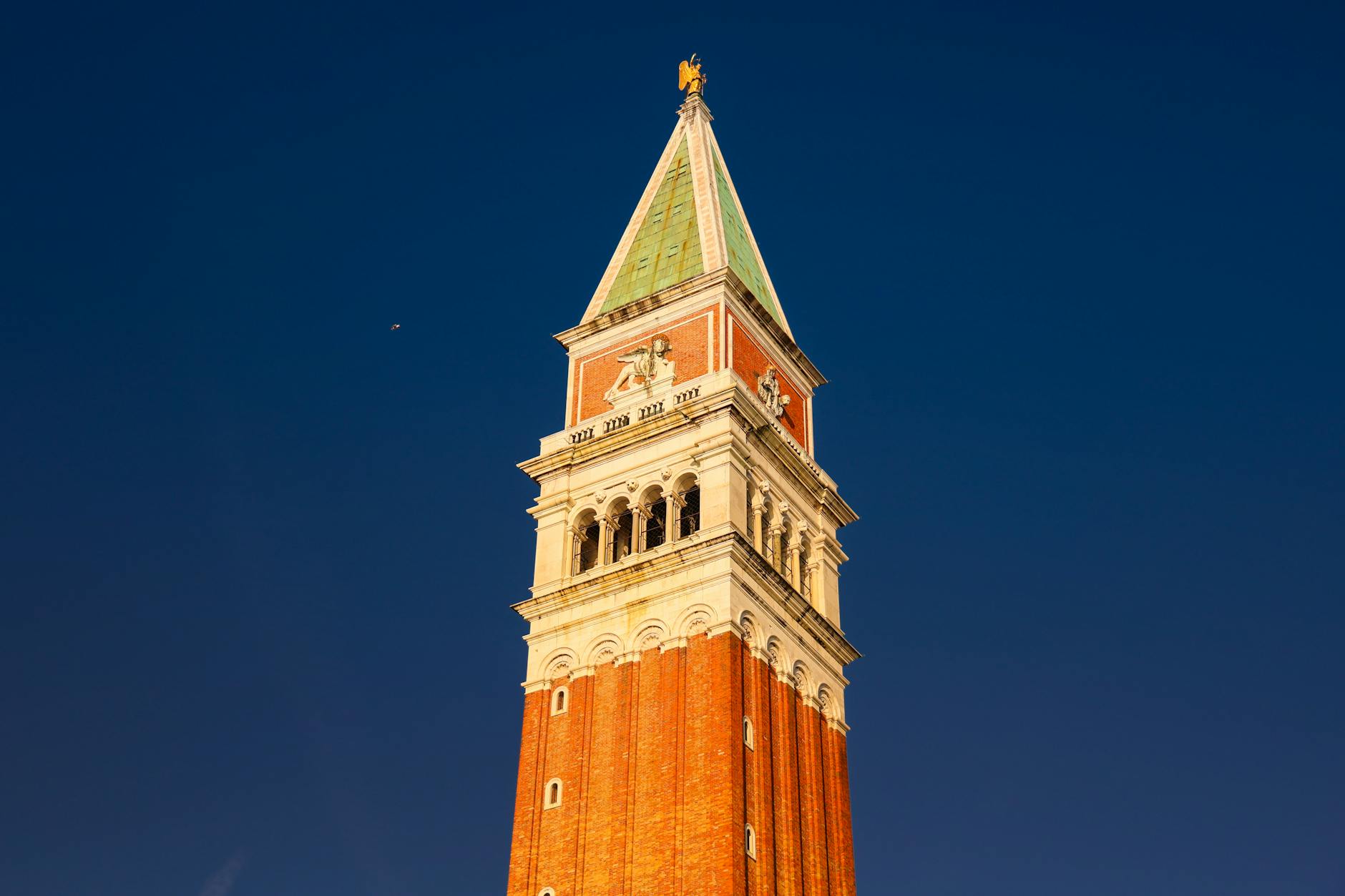
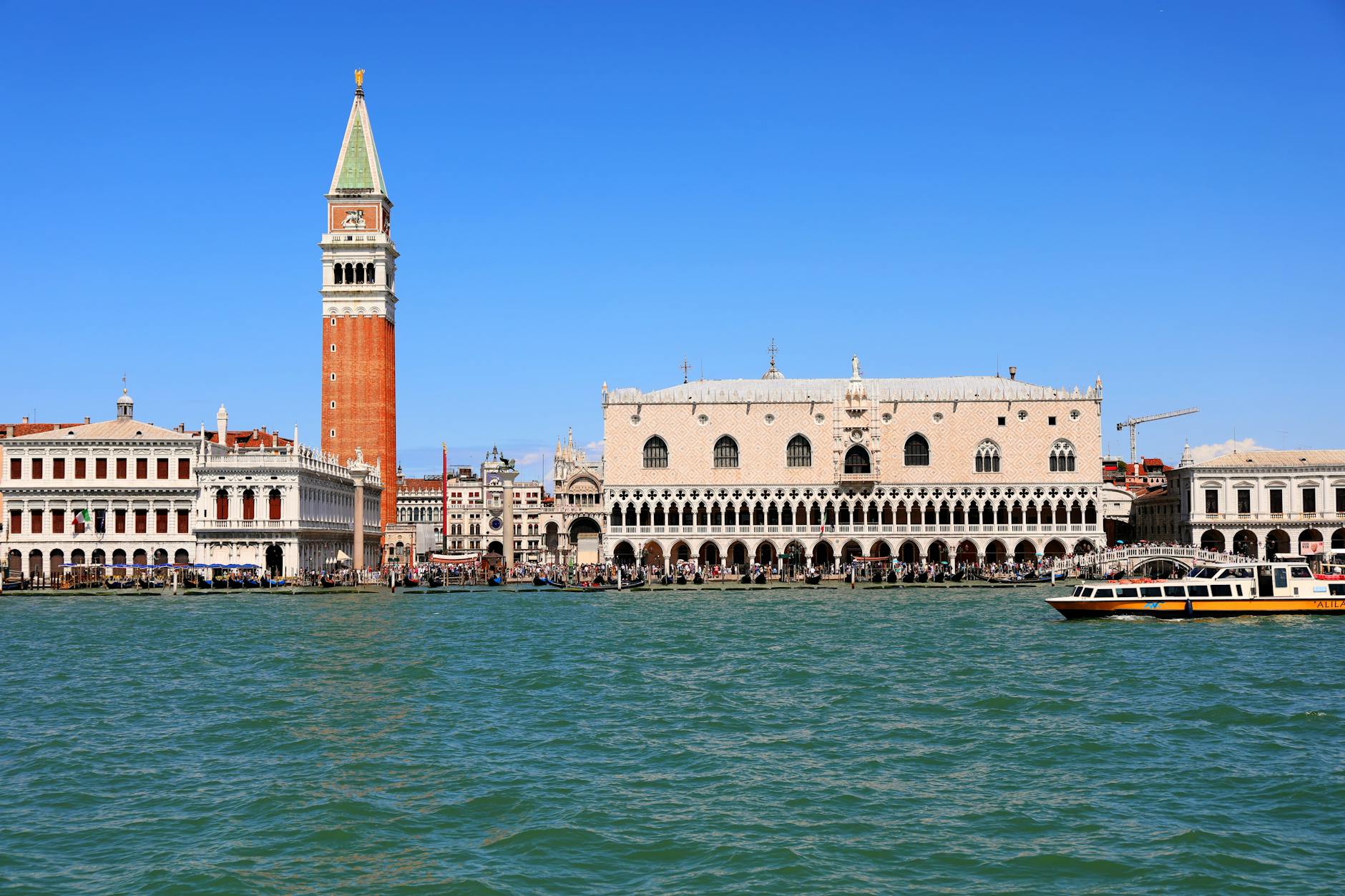
St. Mark’s Square is Venice’s ceremonial heart, bordered by arcades, café terraces, the basilica, the campanile, and the ornate façade of the Doge’s Palace. Napoleon reportedly called it Europe’s finest drawing room.
Arrive early for softer light and thinner crowds. The square changes dramatically through the day, from morning deliveries and pigeons to evening music floating from historic cafés.
Look closely at the basilica’s mosaics, marble patterns, and horses above the entrance. During acqua alta, raised walkways may appear, a reminder that Venice’s beauty is tied to a fragile lagoon.
Rialto Bridge
The Rialto Bridge is the most famous crossing over the Grand Canal and one of Venice’s busiest viewpoints. The current stone bridge was completed in 1591, replacing earlier wooden versions.
Its central arch frames passing vaporetti, gondolas, delivery boats, and private taxis. Sunrise is the quietest time for photos, while late afternoon brings a lively crowd and golden reflections.
Nearby, the Rialto Market gives the area real local texture. Fishmongers, produce stalls, and chefs have long shaped this commercial quarter, once the financial center of the Venetian Republic.
Doge's Palace
The Doge’s Palace tells the story of Venice as a maritime power. Its pink Verona marble, white Istrian stone, and delicate Gothic loggias look graceful, but the building held serious political force.
Inside, vast council halls display paintings by Venetian masters, including Tintoretto and Veronese. The scale of the rooms shows how confidently the republic presented itself to ambassadors, merchants, and rivals.
Do not miss the Bridge of Sighs connection to the old prisons. Visitor reviews confirm that this short passage feels darker and more intimate than the palace’s glittering chambers.
Grand Canal
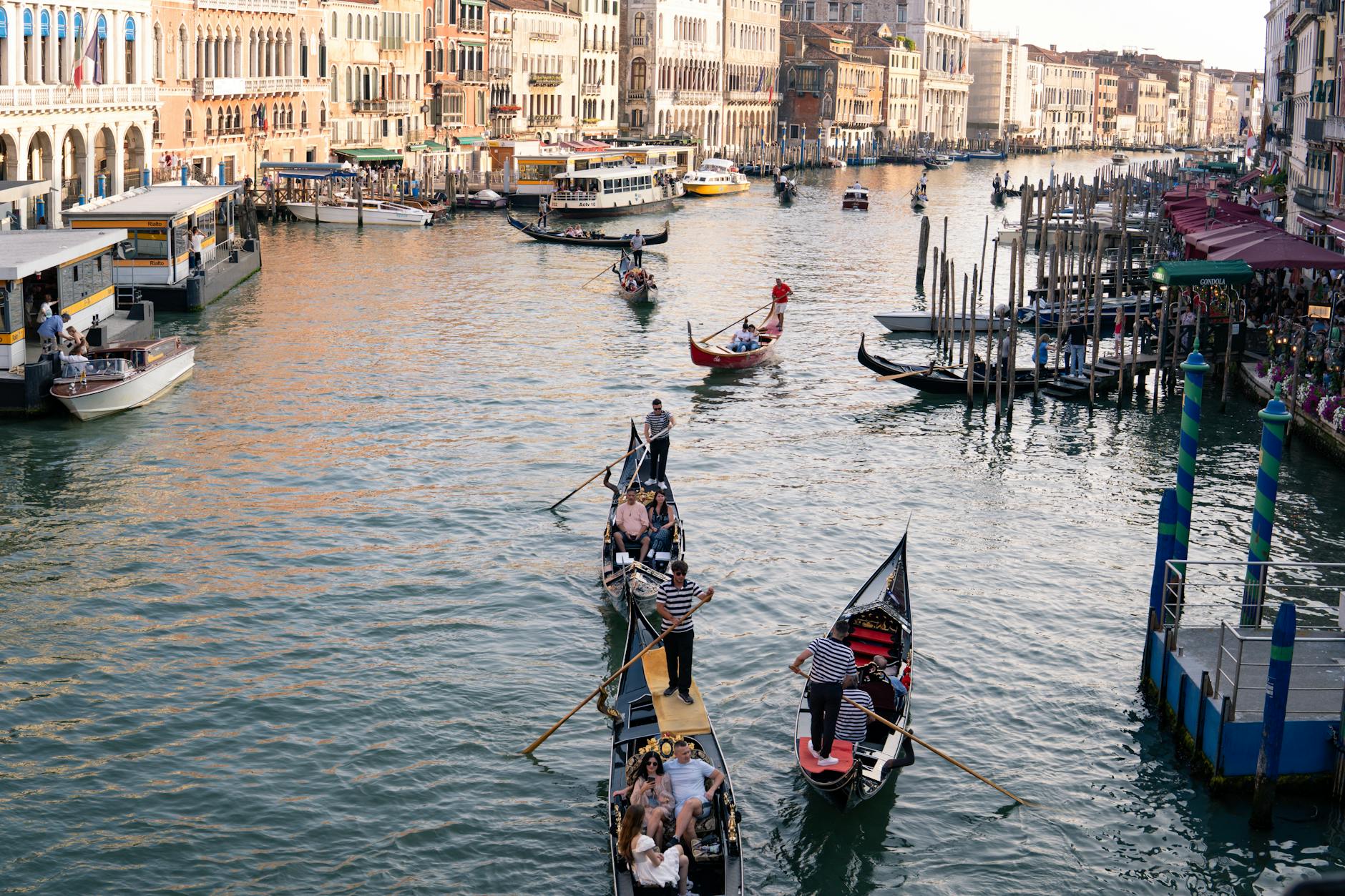
The Grand Canal is Venice’s main waterway, curving through the city in a wide S shape for about 3.8 kilometers. More than 170 historic buildings line its banks.
A vaporetto ride on Line 1 is one of the best-value experiences in Venice. It passes palaces, church fronts, private moorings, and everyday boat traffic at a slow, revealing pace.
For a special view, ride near sunset from Piazzale Roma toward San Marco. The façades turn warm, windows catch the light, and the canal feels like a moving gallery.
- For first-time visitors: ride the vaporetto once by day and once after dark.
- For quieter moments: explore side canals in Dorsoduro or Cannaregio.
- For photography: use bridges near Accademia and Rialto for wide canal views.
Food & local cuisine in Venice
Venetian food is deeply tied to the lagoon, the Adriatic, and old trade routes. Expect seafood, rice, polenta, spices, bitter greens, and small plates served with wine.
Start with cicchetti, Venice’s beloved bar snacks. These small bites may include creamed cod, anchovies, marinated artichokes, meatballs, or soft cheese on bread.
Local guides recommend trying baccalà mantecato, a whipped salt cod spread with a silky texture. Sarde in saor, sweet-and-sour sardines with onions, raisins, and pine nuts, shows the city’s historic spice trade.
For pasta, look for bigoli in salsa, thick noodles with anchovy and onion sauce. Seafood risotto and black squid-ink dishes also appear on traditional menus.
Avoid restaurants with pushy hosts, laminated picture menus, and “tourist menu” boards near the busiest landmarks. Better meals often sit a few lanes away, in small bacari or family-run trattorias.
Venice is not cheap, but eating well does not require luxury dining. A few cicchetti with a glass of local wine can make a satisfying, affordable lunch.
- A local-style snack: cicchetti with a small glass of wine, called an ombra.
- A classic dish: risotto al nero di seppia, made with squid ink.
- A sweet finish: bussolai biscuits from the lagoon island of Burano.
Getting to Venice and getting around
Reaching Venice is straightforward, but the final approach feels different from most cities. Roads and trains stop at the edge of the lagoon city, then boats and walking take over.
Plan luggage carefully. Bridges often have steps, hotel entrances may sit down narrow lanes, and wheeled bags can be awkward on old paving stones.
Getting there
Venice Marco Polo Airport is the main gateway, with buses and water transport linking it to the city. Treviso Airport handles some low-cost flights and sits farther away.
Trains arrive at Venezia Santa Lucia station, right on the Grand Canal. This is one of Europe’s most beautiful rail arrivals, with water taxis, vaporetti, and footpaths directly outside.
Drivers leave cars at Piazzale Roma or Tronchetto, since the historic center has no cars. From there, continue by vaporetto, private water taxi, or on foot.
Getting around
Walking is the most rewarding way to move through Venice. Distances are short, but navigation takes patience because canals, dead ends, and tiny lanes constantly interrupt straight routes.
Vaporetti act as public water buses and connect major stops along the Grand Canal, the railway station, San Marco, Lido, Murano, Burano, and other islands.
Gondolas are scenic rather than practical transport. For a cheaper canal crossing, use a traghetto, a simple gondola ferry used at several points along the Grand Canal.
- Best tool: download an offline map before arrival.
- Best habit: allow extra time, especially when crossing the city.
- Best transport pass: choose a vaporetto pass if taking several rides.
Budget & practical tips
Venice has a moderate to high cost profile compared with many Italian cities. The estimated budget is $$ (Modéré), but timing and hotel location change expenses quickly.
Staying near San Marco costs more, especially in spring, early autumn, and during major events. Cannaregio, Castello, and parts of Dorsoduro can give better value while keeping the historic center walkable.
Book accommodation early, check whether breakfast is included, and confirm how to reach the property from the nearest vaporetto stop. Some addresses look close on maps but involve several bridges.
How much to budget for Venice
For a moderate trip, travelers can expect simple hotels or guesthouses, casual meals, paid landmark entries, and public boat transport. Prices rise sharply for canal-view rooms and private water taxis.
A realistic daily budget might include a modest room, two casual meals, cicchetti snacks, a vaporetto pass, and one paid attraction. Museum passes can help if visiting several cultural sites.
Save money by drinking coffee at the bar, filling a reusable bottle at public fountains, and eating away from the most photographed squares. Always check service charges before sitting at famous cafés.
Best time to visit: April to June and September to October
The best period for visiting Venice is April to June and September to October. These months bring milder weather, longer daylight, and a better balance between atmosphere and crowd levels.
July and August are hotter, busier, and often more humid. Winter is quieter and atmospheric, though fog, cold damp air, and occasional high water can affect plans.
Spring brings wisteria, clear lagoon light, and lively terraces. Early autumn gives warm days, softer evenings, and excellent conditions for slow walks after day-trippers leave.
Visitor reviews often agree on one point: Venice is at its best when explored early in the morning, late in the evening, and beyond the busiest lanes.
Frequently Asked Questions about Venice
See all destinations in Italy
Milan
In Milan, Italy, gothic spires crown the Duomo, Leonardo’s The Last Supper rewards advance booking, and…
DiscoverFlorence
Florence, Italy draws travelers into a Renaissance world where the Duomo, the Uffizi Gallery, and Ponte…
DiscoverRome
Rome, Italy draws millions of visitors each year to walk past the Colosseum, toss a coin in the Trevi…
Discover