Explore Ireland
1 destination to discover
Everything about Ireland
Traveling to Ireland means stepping into a land where ancient myths linger in the mist and every stone wall tells a story centuries old.
The island's wild Atlantic coastline, rolling green hills, and vibrant pub culture create a combination found nowhere else in Europe.
From the buzzing streets of Dublin to the rugged peninsulas of Kerry, Ireland rewards slow travelers and curious wanderers in equal measure.
Why Travel to Ireland?
What Sets Ireland Apart from Other Destinations
Ireland packs an extraordinary density of history, landscape, and character into a relatively small island — just 84,421 km².
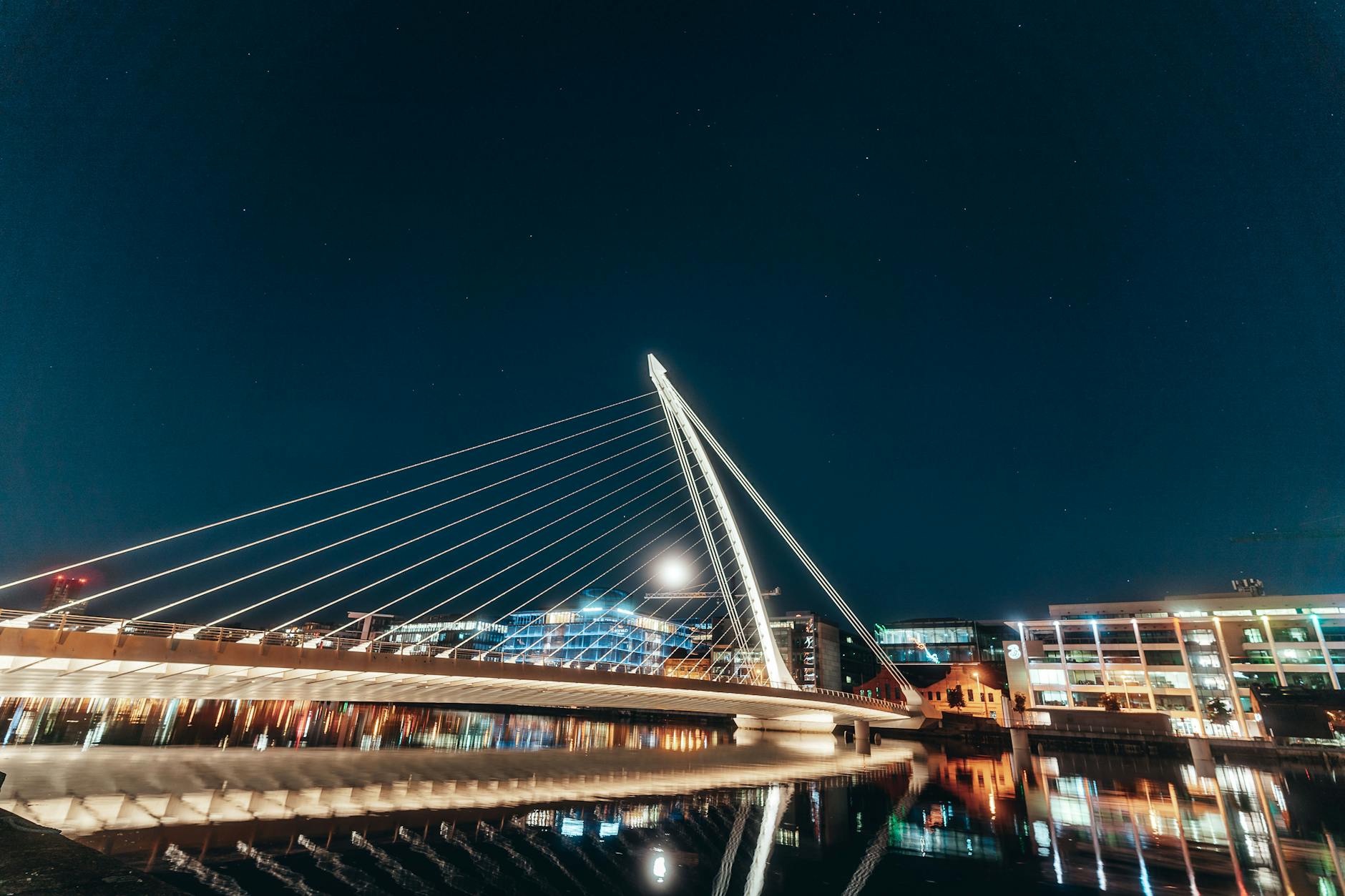
The contrast between urban energy and raw wilderness is striking. A two-hour drive separates Dublin's Georgian townhouses from windswept cliffs dropping into the Atlantic.
The Irish people themselves are a major draw. Visitor reviews consistently highlight the warmth, humor, and genuine hospitality that locals extend to strangers.
Ireland at a Glance
Ireland has a population of approximately 5.1 million people. The official languages are Irish (Gaeilge) and English, though English dominates daily life outside the Gaeltacht regions.
The currency is the Euro (€), and Ireland operates on GMT (GMT+1 during summer). The country shares the island with Northern Ireland, which belongs to the United Kingdom.
Ireland joined the European Union in 1973 and remains one of Europe's most visited destinations, welcoming over 11 million tourists annually before the pandemic years.
Regions and Cities to Explore
The Main Regions of Ireland
The Wild Atlantic Way stretches 2,500 km along the western coastline, covering counties from Donegal in the north down to Cork in the south.
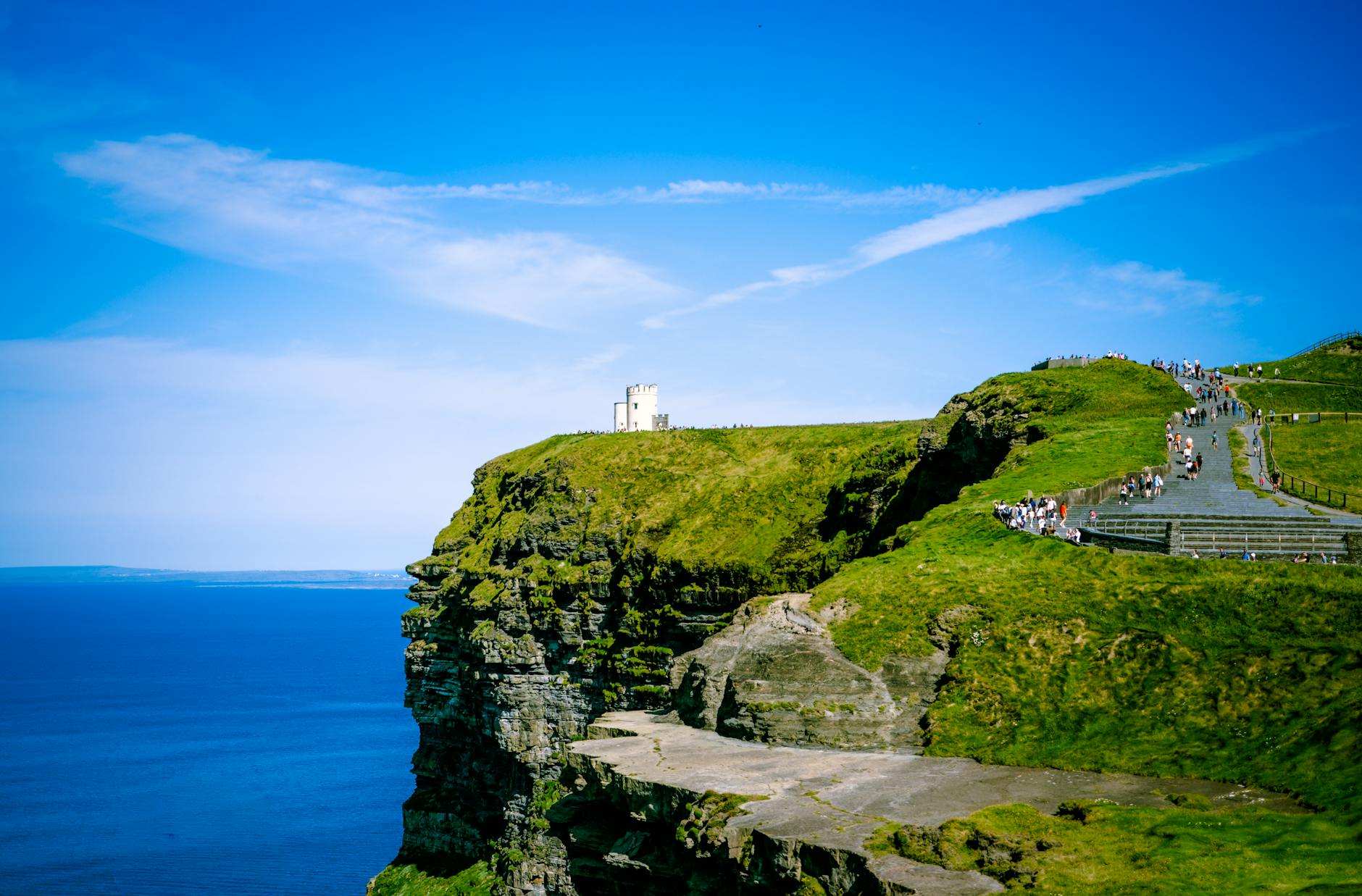
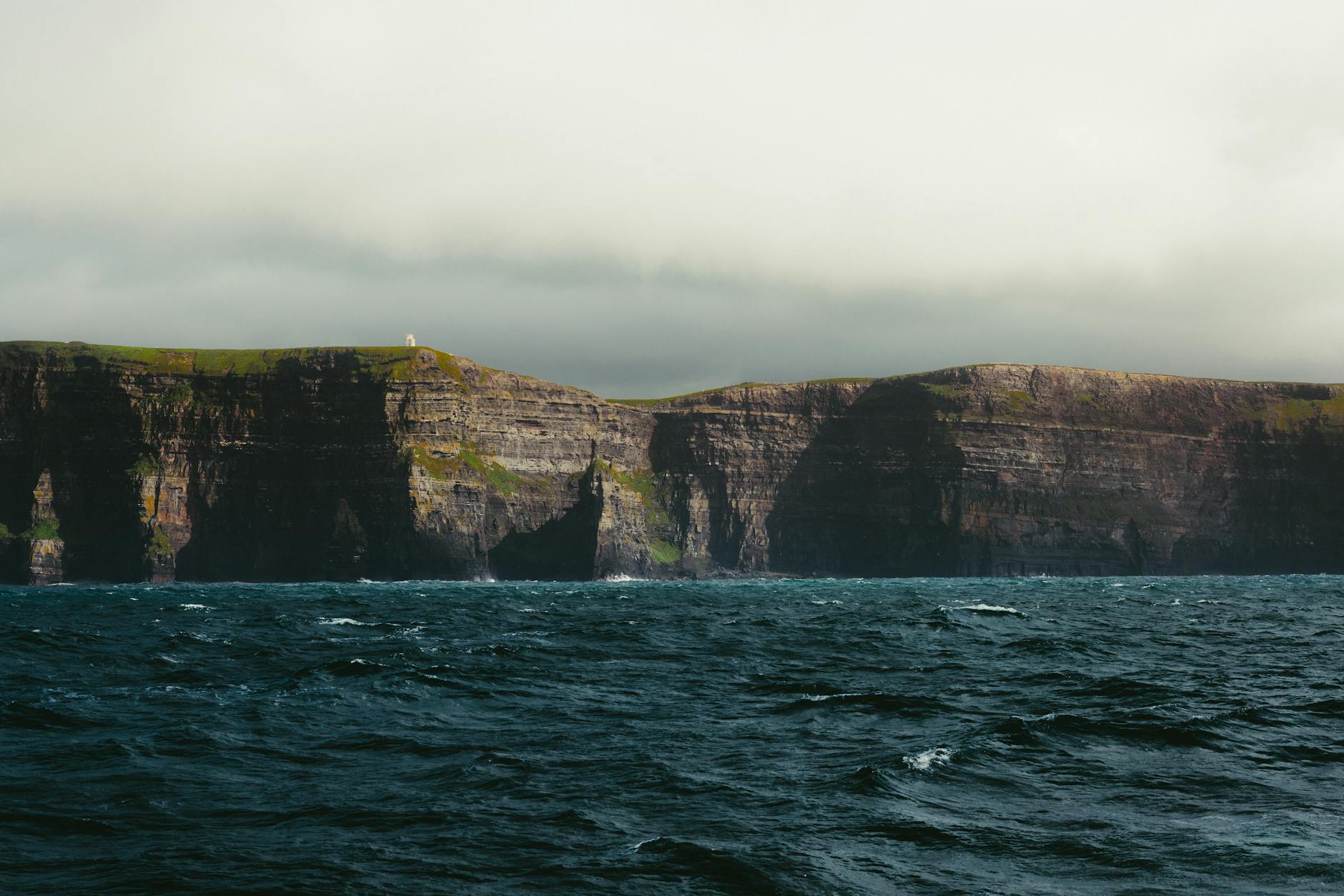
The west — Clare, Galway, Mayo — holds some of the most dramatic scenery. The Cliffs of Moher, rising 214 meters above the sea, draw nearly 1.5 million visitors each year.
The Midlands offer a quieter Ireland of bogs, lakes, and monastic ruins. Counties like Roscommon and Offaly see far fewer tourists, which makes them genuinely refreshing to explore.
The southeast — Wexford, Waterford, Kilkenny — is warmer and drier than the rest of the country, with medieval heritage at every turn. The ancient east corridor links Newgrange (older than the Egyptian pyramids) to the Rock of Cashel.
Which Cities Should You Visit?
Dublin, the capital, is home to around 1.4 million people in its greater area. Trinity College, the Guinness Storehouse, and the National Museum anchor a city that also pulses with live music and literary history.
Cork is Ireland's second city and fiercely proud of it. The English Market, a covered food hall operating since 1788, is one of the finest in Europe — local guides regularly recommend it as the single best introduction to Irish food culture.
Galway is compact, colorful, and almost addictively lively. The Latin Quarter's narrow streets fill nightly with traditional music spilling from pubs, and the city serves as the natural gateway to Connemara.
Killarney sits within the national park that bears its name — 102 km² of mountains, lakes, and ancient oak woodland. It operates as the base for exploring the Ring of Kerry, one of Ireland's most iconic scenic drives.
Culture, Traditions and Way of Life
Irish culture runs deep and expresses itself loudly. Music, storytelling, sport, and language all carry enormous weight in daily life.
Traditional music (trad) is not a tourist performance — it's a living practice. Sessions happen spontaneously in pubs across the country, musicians joining in without announcement or payment.
Gaelic games — hurling and Gaelic football — inspire a level of local passion that rivals football anywhere in Europe. Croke Park in Dublin, with a capacity of 82,300, fills for All-Ireland finals every September.
Ireland's literary tradition punches far above its weight. Four Irish writers have won the Nobel Prize in Literature: Yeats, Shaw, Beckett, and Seamus Heaney. Bookshops and libraries are treated as community spaces, not just shops.
The pub remains the social heartbeat of Irish towns and villages. It functions as a meeting room, a concert hall, and a news exchange simultaneously — not simply a place to drink.
St. Patrick's Day on March 17th draws millions worldwide, but inside Ireland the celebration carries genuine cultural pride, not just spectacle.
Food: The Flavors of Ireland
Irish food has undergone a quiet revolution over the past two decades. The international cliché of overboiled vegetables and stodgy stews no longer reflects what's on the plate.
The seafood along the western coast is exceptional. Galway Bay oysters, fresh Atlantic salmon, and Dingle Bay crab are staples that local chefs build entire menus around.
A traditional Irish breakfast — full Irish — includes bacon, sausages, black and white pudding, eggs, grilled tomatoes, and brown soda bread. It remains the most satisfying way to start a day of driving rural roads.
Irish soda bread and brown bread deserve special mention. Made with buttermilk and baked fresh daily in most households and bakeries, they appear at almost every table.
Budget travelers can eat well in Ireland. A pub lunch of Irish stew or fish and chips averages €12–16. Farmers' markets in Cork, Dublin, and Galway sell artisan cheeses, charcuterie, and fresh produce at reasonable prices.
Craft beer and Irish whiskey have both surged in quality and variety. Distilleries like Teeling in Dublin and Dingle in County Kerry welcome visitors for tastings and tours.
Practical Information
Visa and Entry Requirements
Citizens of the EU, EEA, USA, Canada, Australia, and many other countries can enter Ireland without a visa for stays up to 90 days.
Ireland is not part of the Schengen Area, so it maintains its own border controls. A valid passport is required — EU national identity cards are accepted for EU citizens only.
Post-Brexit, travelers moving between Ireland and Northern Ireland cross no formal border checkpoint, but crossing between Ireland and Great Britain requires standard UK/Ireland entry documentation.
Budget and Cost of Living
Ireland sits at the higher end of European travel costs. Dublin in particular ranks among Europe's most expensive capitals for accommodation and dining.
Budget travelers spending carefully can manage on €70–90 per day (hostel bed, self-catering, pub lunch). Mid-range travel — comfortable B&Bs, one sit-down dinner daily — runs closer to €150–200 per person per day.
Rural areas and smaller towns are noticeably cheaper than Dublin. Accommodation in County Kerry or Connemara can cost 30–40% less for equivalent quality.
Getting Around
Renting a car is by far the most practical way to explore Ireland beyond the main cities. The road network outside urban areas consists largely of narrow country roads — an adventure in itself, but one requiring a left-hand-drive adjustment for many visitors.
Bus Éireann and Irish Rail connect major towns and cities. The Dublin-Cork and Dublin-Galway train routes run multiple times daily and take roughly 2.5 hours each.
When to Visit Ireland?
Ireland's weather is famously unpredictable — mild, wet, and changeable year-round. No season delivers guaranteed sunshine, but each has its own distinct character.
June through August brings the longest days and the most activity. Average temperatures hover around 18–20°C along the coast. This is high season — prices peak and popular sites fill fast.
Travelers note that May and September offer the best balance of reasonable weather, lighter crowds, and lower accommodation rates. The landscape stays green and dramatic, and pub sessions continue uninterrupted.
Winter in Ireland is atmospheric rather than festive in a commercial sense. Coastal storms are spectacular viewed from the right vantage point, and Christmas markets in Dublin, Cork, and Galway add warmth to the short dark days.
March draws visitors for St. Patrick's Day festivities, with parades in every town and a national mood of celebration. October's Galway International Arts Festival and Wexford Opera Festival make autumn compelling for culture-focused travelers.
The simple truth is that Ireland in the rain can be just as memorable as Ireland in the sun — sometimes more so.
Frequently Asked Questions about Ireland
Similar Destinations
Explore more destinations in the same region of the world.
Stockholm
Stockholm, Sweden's capital spread across 14 islands, rewards visitors with medieval cobblestones in Gamla…
DiscoverLondon
London, United Kingdom, pulls visitors in with landmarks like Big Ben, the London Eye, and the British…
DiscoverOslo
Oslo, Norway's dynamic capital, pairs raw Scandinavian landscapes with world-class culture: the Edvard Munch…
Discover