Athens

Everything about Athens
What if a single hill could contain 2,500 years of Western civilization? Visiting Athènes means standing at the origin point of democracy, philosophy, and architectural perfection — all within one extraordinary city.
Greece's capital wears its history openly. Ancient ruins sit beside neighborhood cafés, Byzantine churches squeeze between neoclassical boulevards, and the smell of grilled souvlaki drifts past marble columns older than Rome itself.
Athens surprises visitors who expect a dusty museum city. The energy here is alive, layered, and genuinely addictive — a place where the ancient and the contemporary collide on every street corner.
Why visit Athènes?
What makes Athènes unique
Athens holds a distinction no other European capital can match: it has been continuously inhabited for over 3,000 years. Every neighborhood carries geological layers of history — Mycenaean, Classical, Roman, Byzantine, Ottoman — stacked on top of each other.
The contrast between ancient monuments and vibrant street life gives Athens a texture that feels unlike any other destination. You can touch a marble column at dawn, then eat the best taramasalata of your life an hour later.
Athènes at a glance
Athens sits in the Attica basin, ringed by four mountains and open to the Saronic Gulf. The city holds around 3.7 million people in its greater metropolitan area — the largest urban concentration in Greece by far.
The historic center is surprisingly walkable. The Acropolis, Plaka, the ancient Agora, and the Acropolis Museum all sit within a compact zone you can cover on foot in a single focused day, though two or three days rewards far better.
What to see and do in Athènes?
Acropolis
The Acropolis of Athens rises 156 meters above the city on a flat-topped limestone rock. It is a UNESCO World Heritage Site and arguably the most recognizable ancient landmark in the world.
The climb rewards immediately. As you ascend the Propylaea — the monumental gateway — the scale of ancient Athenian ambition becomes physical, not just intellectual.
Arrive at opening time, currently 8:00 AM, to beat the crowds and the heat. Local guides strongly recommend visiting on weekdays between April and June for the least congested experience.
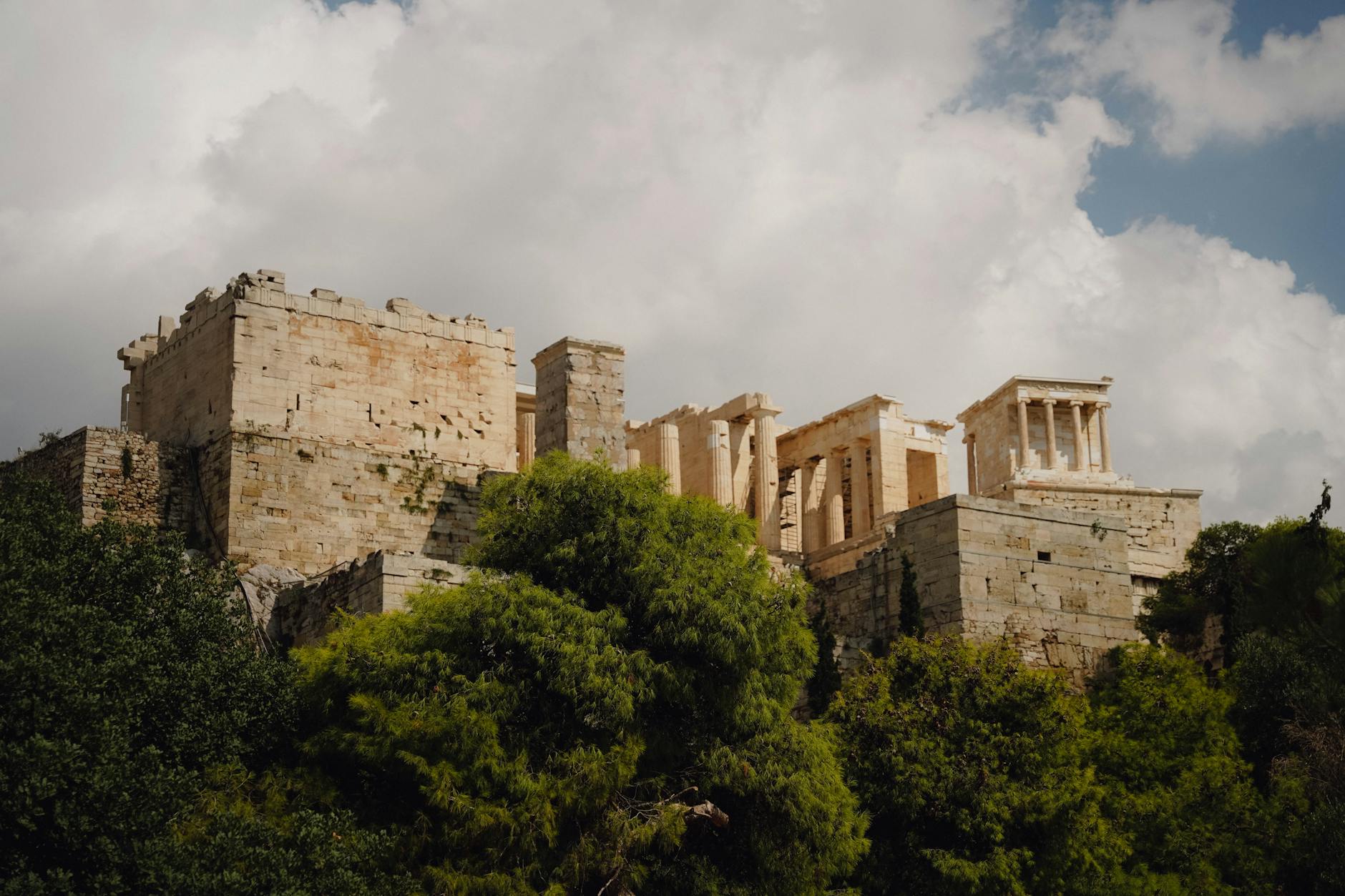
The views from the top are genuinely breathtaking. On clear days you can see all the way to the island of Aegina, and the city below suddenly makes sense as a geographic whole.
Parthenon
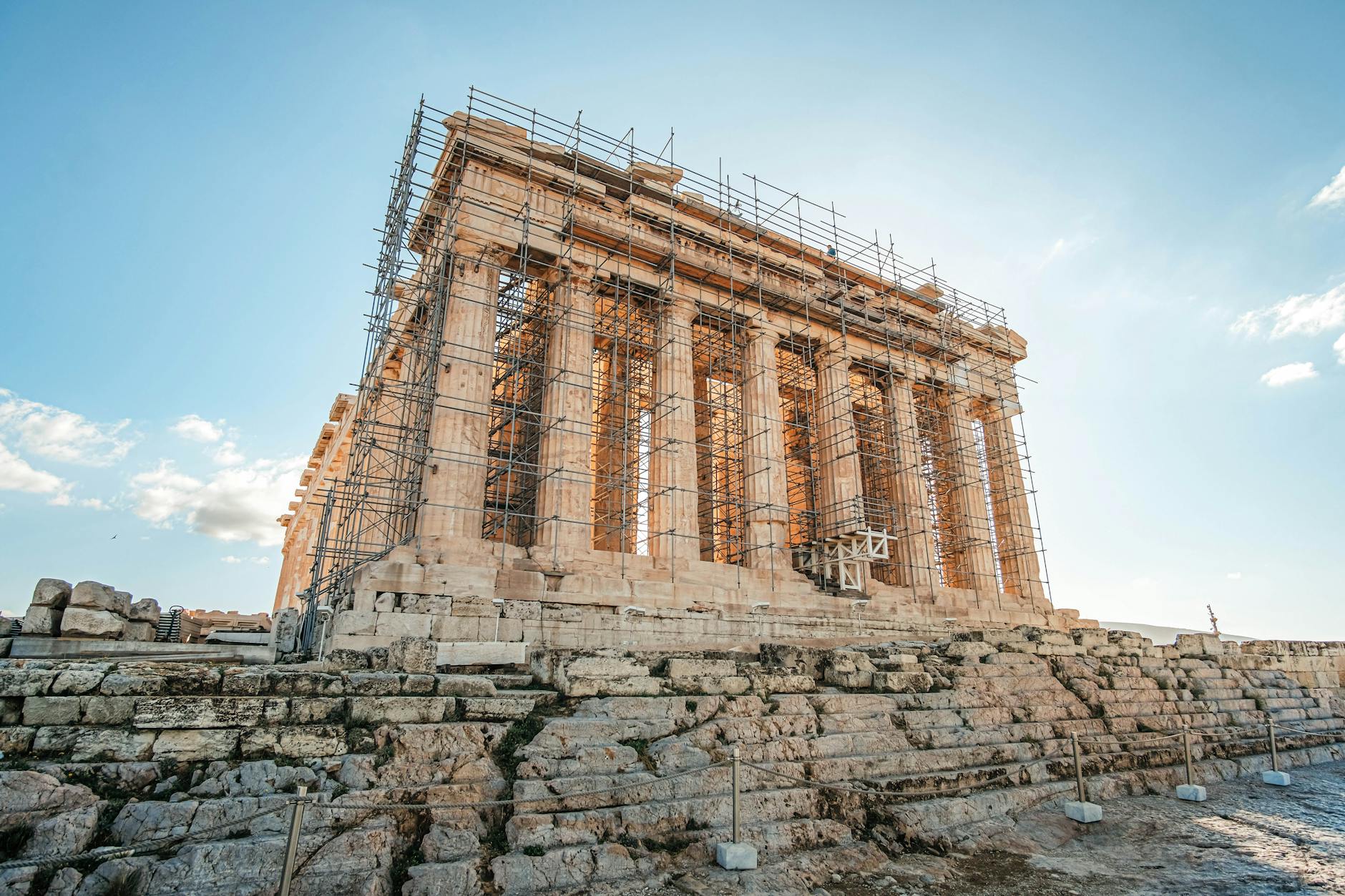
The Parthenon, built between 447 and 432 BCE, is the centerpiece of the Acropolis and one of humanity's greatest architectural achievements. It was dedicated to the goddess Athena, patron deity of the city.
What stuns visitors is the scale of the optical illusion built into its design. The columns appear perfectly straight, but every line is subtly curved — ancient Greek architects corrected for visual distortion with mathematical precision.
Restoration work is ongoing but never obscures the monument's power. The Parthenon's 46 outer columns still stand, and the structure communicates both mass and elegance in a way photographs simply cannot capture.
Visitor reviews consistently note that seeing the Parthenon in person reframes everything they thought they understood about ancient architecture. It is not a ruin — it is a statement.
Plaka District
The Plaka neighborhood sprawls across the northern and eastern slopes of the Acropolis, a labyrinth of neoclassical houses, bougainvillea-draped alleys, and tiny Byzantine churches tucked into unexpected corners.
It is the oldest continuously inhabited neighborhood in Athens. Some streets here follow paths laid down in antiquity, and the atmosphere shifts dramatically between midday tourist bustle and quiet evening calm.
The main streets host souvenir shops and tavernas, but walk two blocks off the main drag and the neighborhood becomes residential, genuine, and peaceful. Adrianou Street is the spine; the back alleys are where the real character lives.
Evenings in Plaka belong to candlelit dinners, retsina wine, and the distant sound of a bouzouki somewhere nearby. Travelers regularly describe this as one of the most atmospheric neighborhoods in all of Southern Europe.
Acropolis Museum
The Acropolis Museum, opened in 2009, was designed by Swiss-American architect Bernard Tschumi and houses over 4,000 artifacts recovered from the Acropolis and its slopes. It is a world-class facility by any measure.
The ground floor is built over actual archaeological excavations visible through glass floors underfoot. Walking through the entrance feels like floating above an ancient Athenian neighborhood.
The top floor — the Parthenon Gallery — displays the surviving frieze sculptures at eye level, in their original orientation. The deliberate empty spaces in the display mark where the Elgin Marbles remain in London, a political statement made with architectural silence.
Allow at least two hours here. The museum does not rush you, and the quality of explanation, lighting, and curation makes it one of the finest archaeological museums in Europe.
Food & local cuisine in Athènes
Athens eats seriously. The food scene has evolved dramatically in the past decade, but the soul of Athenian cooking remains rooted in simple, quality ingredients treated with respect.
A proper Athenian breakfast means tiropita — cheese pie — from a neighborhood bakery, eaten warm, wrapped in paper, standing on the pavement. This is not a tourist ritual; it is what locals actually do.
Lunch leans toward mezedes: small shared plates of tzatziki, grilled octopus, fava bean purée, and stuffed vine leaves. The Central Market on Athinas Street, known as the Varvakios Agora, is where chefs shop and where curious visitors find the city's unfiltered culinary soul.
For dinner, head to the Monastiraki or Psiri neighborhoods. Tavernas here serve lamb slow-cooked with orzo, fresh grilled sea bream, and horiatiki salata — the classic Greek salad — that bears little resemblance to what gets exported abroad.
Athens also has a growing craft cocktail and natural wine culture. The rooftop bars around Monastiraki Square combine excellent drinks with direct views of the illuminated Acropolis, a combination that needs no further recommendation.
Expect to spend €25–45 per person for a full dinner with wine at a good traditional taverna. Street food options like gyros and spanakopita keep daytime costs very low.
Getting to Athènes and getting around
Getting there
Athens International Airport Eleftherios Venizelos (ATH) sits about 33 kilometers east of the city center and connects to over 60 countries year-round. Most major European capitals have multiple daily flights.
The airport metro (Line 3) runs directly to Syntagma Square in approximately 40 minutes for €10 one-way. Taxis from the airport to the center cost a flat rate of €38 during the day and €54 at night — fixed, metered, and clearly posted at the taxi rank.
Getting around
The historic center is genuinely walkable. The metro system is clean, punctual, and inexpensive — a single ticket costs €1.40 and covers buses, trams, and the metro for 90 minutes. Three metro lines connect all major neighborhoods and transport hubs.
Taxis are abundant and reasonably priced by European standards. Ride-hailing apps like Beat and Uber operate in Athens, giving visitors an easy alternative with upfront pricing. Avoid renting a car in the city center; traffic and parking make it more frustrating than useful.
Budget & practical tips
How much to budget for Athènes
Athens sits in the premium (€€€) travel category, though it delivers exceptional value for the price compared to other European capitals. Mid-range hotels in central neighborhoods run €120–200 per night.
The combined Acropolis ticket costs €30 and includes entry to seven major archaeological sites — the Acropolis, the Ancient Agora, the Roman Agora, Hadrian's Library, Kerameikos, the Temple of Olympian Zeus, and the Lykeion. It is valid for five days.
A realistic daily budget for a comfortable visit — good hotel, two restaurant meals, two to three attractions, and transport — lands around €150–200 per person. Budget travelers using hostels and street food can manage on €70–90 per day.
Best time to visit: Avril à Juin et Septembre à Octobre
April through June brings mild temperatures between 18°C and 28°C, manageable crowds, and wildflowers blooming across the archaeological sites. The light in May is particularly beautiful — warm but not harsh.
September and October mirror these conditions after the July–August peak season. Temperatures remain warm enough for outdoor dining and evening walks, but the summer crowds thin considerably by mid-September, making the monuments far more pleasant to visit.
July and August are hot — regularly above 35°C — and the Acropolis becomes extremely crowded. Visitor data from the Hellenic Ministry of Tourism shows July as the single busiest month, with over one million visitors recorded at the Acropolis site alone in recent years.
Frequently Asked Questions about Athens
Similar Destinations
Florence
Florence, Italy draws travelers into a Renaissance world where the Duomo, the Uffizi Gallery, and Ponte…
DiscoverRome
Rome, Italy draws millions of visitors each year to walk past the Colosseum, toss a coin in the Trevi…
DiscoverMadrid
Madrid, Spain's vibrant capital, draws travelers with the world-class art of the Prado Museum, the grandeur…
Discover