
Burgundy produces some of the most sought-after white wines in the world! This is not a matter of marketing: it is the result of a rare combination of a unique grape variety, very diverse soils and a millennia-old division of plots.
In this article, we will explain what makes Burgundy famous in this area, but also how to find your way among the different terroirs.
Why is Burgundy a global benchmark for white wines?
The role of Chardonnay
All white Burgundy wines are based on a single grape variety: Chardonnay.
This choice is not a constraint, it is a strength. Chardonnay is a neutral grape variety, meaning that it expresses very faithfully what the soil and climate give it.
Two plots of land 200 meters apart can produce very different wines using the same winemaking methods. This is what is called the expression of terroir.
A unique diversity of climates
In Burgundy, the word "climat" does not refer to the weather. It designates a delimited plot of land, often dating back to the Middle Ages, with a proper name and a precise status.
There are more than 1,200 of them in Burgundy, and some are classified as Premier Cru, others as Grand Cru.
This hierarchy reflects observations accumulated over several centuries: certain plots systematically produce more complex, more concentrated wines, better suited to aging.
Influence of soil and exposure
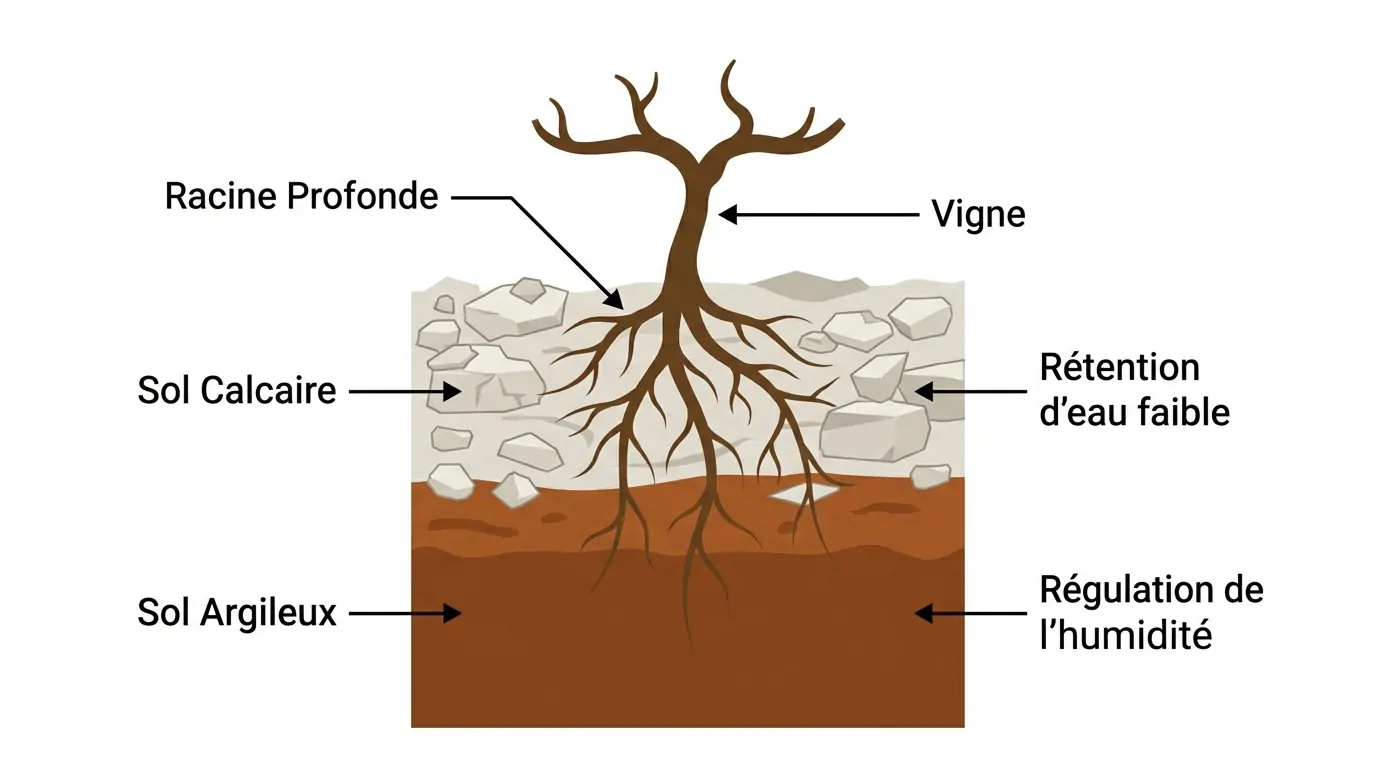
Great white Burgundies grow mainly on limestone and clay soils. Limestone does not retain water well and forces the vine to root deeply, while clay regulates humidity and brings minerality to the wine.
Exposure also plays a direct role: the best plots of the Côte de Beaune are oriented east or southeast, which maximizes morning sunshine while avoiding excessive heat in the afternoon.
The great terroirs of the Côte de Beaune
The Côte de Beaune is home to the most prestigious appellations for white wines. Three communes dominate.
Meursault
Meursault is the largest appellation in the Côte de Beaune for white wines. It does not have any Grand Cru vineyards, but several recognized Premier Cru vineyards: Perrières, Genevrières, Charmes.
Meursault wines are generally round, with notes of toasted hazelnut, butter, and sometimes yellow fruit. Oak is often present but well-integrated in good bottles.
It is an appellation accessible at the entry level, but which can produce very high-quality wines on its best plots.
To choose a great quality Meursault wine , it is useful to rely on a specialist wine merchant who lists producers and vintages with detailed information sheets.
Puligny-Montrachet
Puligny-Montrachet shares with Chassagne two of the world's most highly regarded Grands Crus: Le Montrachet and Bâtard-Montrachet.
Puligny wines are often described as more taut and mineral than those of Meursault, because they express a marked acidity which allows them to age well.
Premier Crus such as Les Pucelles or Le Cailleret are relevant entry points into the appellation before tackling the Grands Crus.
Chassagne-Montrachet
Chassagne-Montrachet is known for both its white and red wines, which is rare on the Côte de Beaune. Its white wines share the same Grand Cru vineyards as Puligny on the bordering plots.
The style is often more generous, with more volume on the palate and aromas of ripe white fruits.
The Premiers Crus of Chassagne often offer a good balance between quality level and price, compared to Puligny or the Grands Crus.
The characteristics of great white Burgundy wines
A great white Burgundy can be recognized by several things.
First, there is a present but integrated acidity, which gives length without aggressiveness.
Next, a texture often described as oily or creamy, which comes from the malolactic fermentation practiced by most producers.
When present, oak should not overpower the fruit or mask the minerality. Furthermore, in top appellations, the finish is long and often marked by a flinty or chalky sensation.
These wines generally age quite well.
For example, a Meursault Premier Cru or a Puligny Premier Cru often expresses itself better between 5 and 10 years after the harvest.
Regarding the Grands Crus, they can last 15 to 20 years without any problem in good vintages.
How to choose a great white Burgundy?
The first criterion is the appellation and hierarchy of the plot: Village, Premier Cru, Grand Cru.
The second is the producer: in Burgundy, two bottles of the same appellation and vintage can be very different depending on who made them.
The third is the vintage: 2019 and 2020 are two warm and generous years, well represented on the market, while 2017 and 2014 often have a more taut profile, often better at the table.
To find out more, shops like vinsetmillesimes.com offer a selection organised by appellation and by producer, with the vintages available.
If you wish to improve your knowledge, we invite you to discover our short wine quiz which will allow you to learn a little more, while having fun.
This is a useful starting point for better comparison before buying!
