Explore Morocco
1 destination to discover
Everything about Morocco
Traveling to Morocco means crossing into a world where the ancient and the vivid collide at every turn — where medieval medinas press against desert edges and Atlantic winds carry the scent of cedar and spice.
This North African kingdom stretches across nearly 447,000 square kilometers, from the Rif Mountains to the Saharan dunes of Erg Chebbi.
Few destinations on earth pack this much contrast into a single border crossing: snow-capped Atlas peaks, blue-painted alleyways, Roman ruins, and souks loud with copper hammers and saffron traders.
Why travel to Morocco?
What sets Morocco apart from other destinations
Morocco sits at a geographic and cultural crossroads — Berber, Arab, Andalusian, and sub-Saharan influences have layered themselves over centuries into something genuinely distinct.
The country holds four UNESCO-listed medinas, two Roman archaeological sites, and one of the oldest continuously operating universities in the world, the University of al-Qarawiyyin in Fès, founded in 859 AD.
Visitors can ride a camel at sunrise, swim in the Atlantic by afternoon, and eat a slow-cooked tagine in a 14th-century riad by evening — all without leaving the country.
Morocco at a glance
- Population: approximately 37 million inhabitants
- Area: 446,550 km² (excluding Western Sahara)
- Capital: Rabat
- Official languages: Arabic and Tamazight (Berber)
- Currency: Moroccan Dirham (MAD) — roughly 10 MAD per 1 USD
- Religion: Islam (predominantly Sunni)
- Time zone: GMT+1 year-round
Regions and cities to explore
The main regions of Morocco
The Atlantic coast runs for over 3,000 kilometers, shaped by fishing villages, wind-battered ramparts, and laid-back resort towns like Agadir and Essaouira.
Agadir rebuilt itself almost entirely after the devastating 1960 earthquake and now functions as Morocco's beach capital — wide sandy bay, modern hotels, surf schools running year-round.
The imperial heartland — Fès, Meknès, and Rabat — holds the country's political and spiritual weight. These cities carry the architectural DNA of successive dynasties.
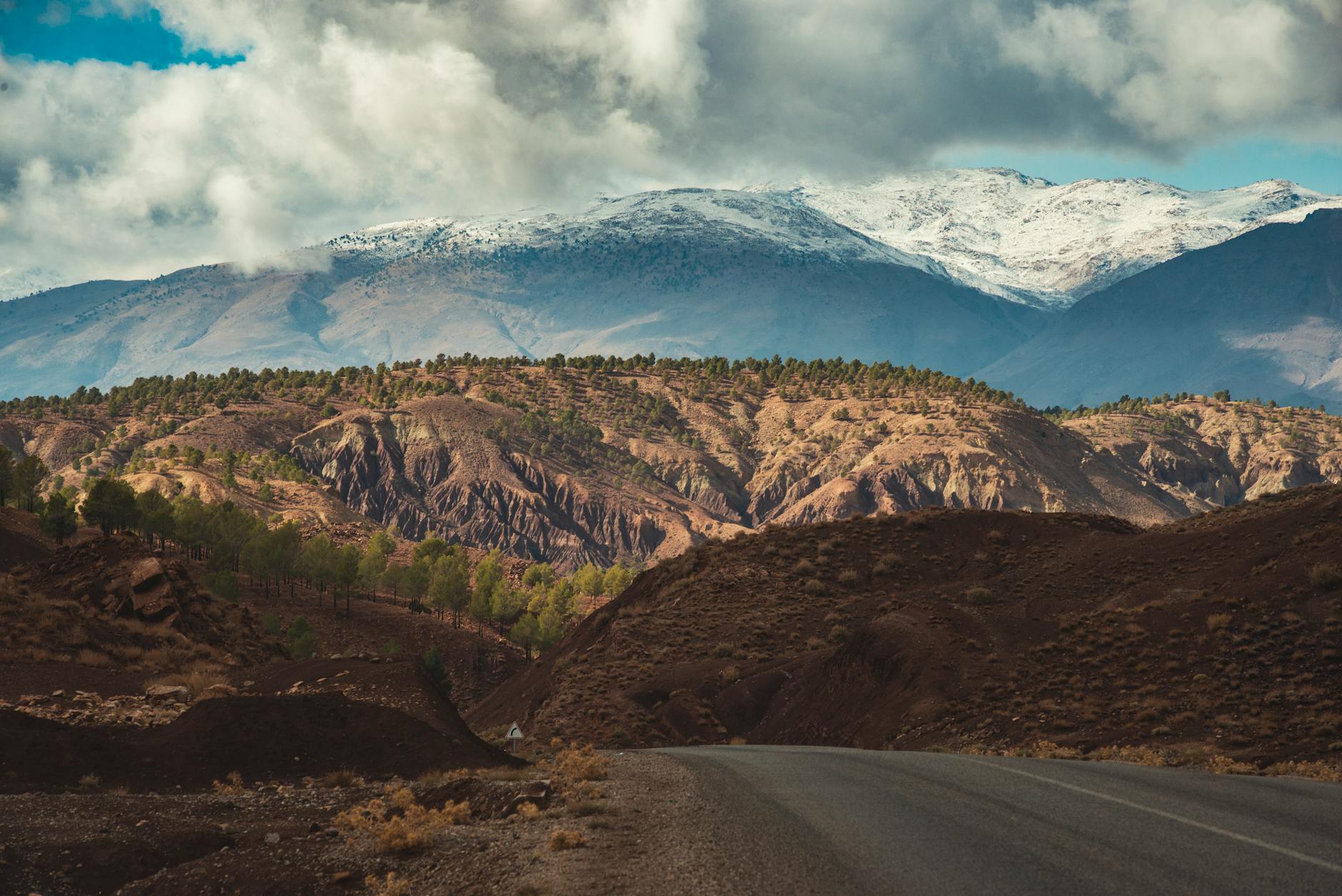
The High Atlas and the south draw trekkers, road-trippers, and photographers. The Drâa Valley's palmeries and the kasbahs of the pre-Saharan zone feel a world apart from the coast.
Northern Morocco, anchored by Tangier and the Rif Mountains, has its own personality — Mediterranean light, cooler temperatures, and a long history of European crossings and artistic exile.
Which cities should you visit?
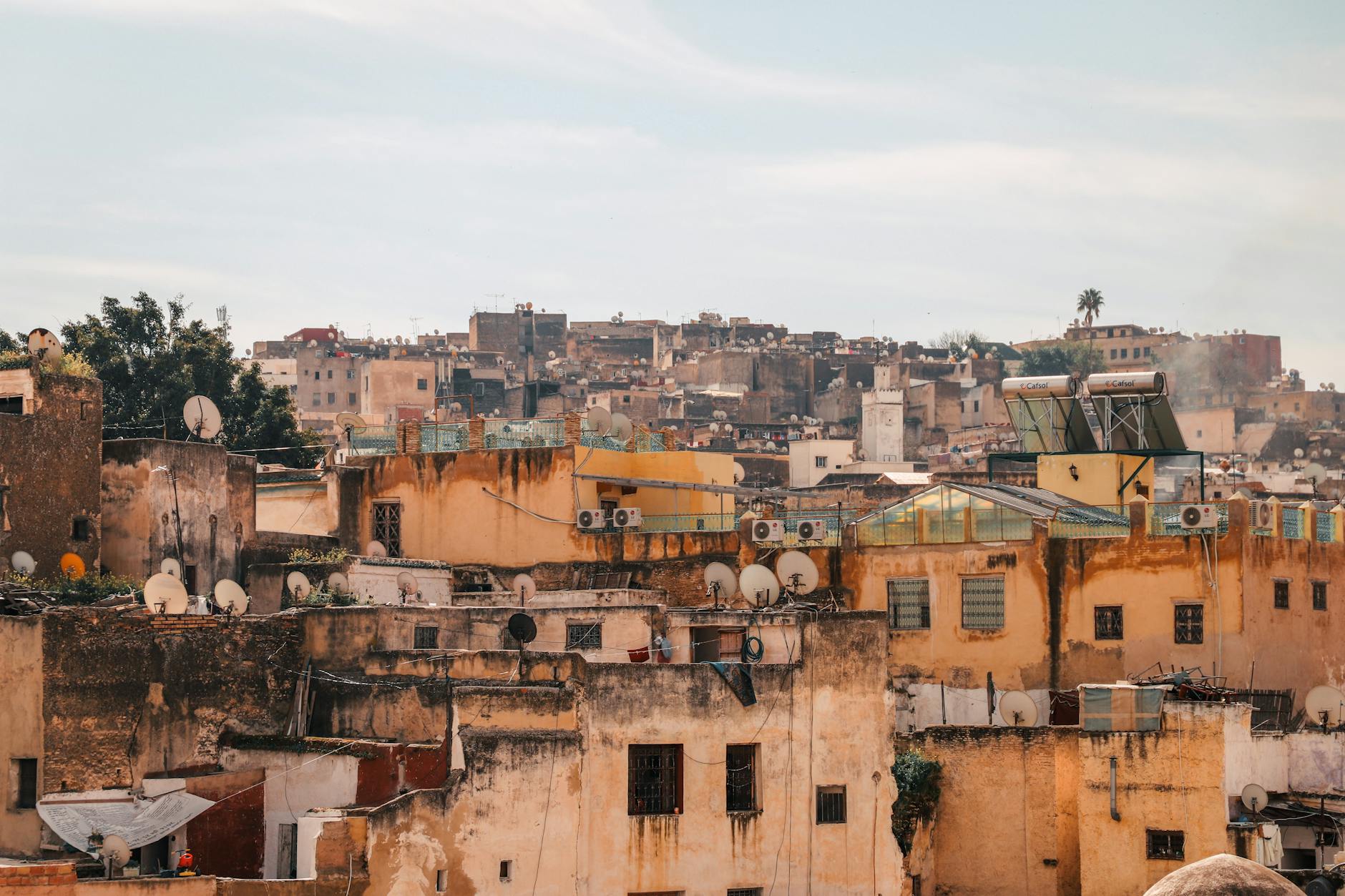
Fès is where most travelers recalibrate their sense of time. The medina of Fès el-Bali, a UNESCO World Heritage Site, contains over 9,000 streets and alleys — no cars, just mules and foot traffic.
Chefchaouen is more than its famous blue walls. Perched in the Rif Mountains at 600 meters altitude, this small city of around 45,000 people combines genuine mountain tranquility with some of Morocco's best wool weaving traditions.
Essaouira moves to a different rhythm — a constant Atlantic wind, Gnawa musicians on the ramparts, and a historic medina built by a French architect in the 18th century.
Aït Benhaddou is technically a ksar, a fortified village, not a city — but no itinerary south of the Atlas should skip it. This UNESCO-listed earthen citadel has appeared in more films and television productions than almost any location in Africa.
Culture, traditions and way of life
Moroccan culture runs deep into hospitality. Local guides consistently point out that accepting mint tea — served sweet, three times — is not optional: it is the language of welcome.
The hammam is a social institution, not a tourist attraction. Neighborhood hammams in any Moroccan city charge between 10 and 20 MAD for entry, offering access to a centuries-old ritual of steam, black soap, and kessa scrubbing.
The souks organize themselves by trade in a logic that dates to the medieval guilds: leatherworkers in one quarter, spice merchants in another, weavers, carpenters, and jewelers each in their own lane.
Ramadan transforms the country's rhythm entirely. Cities that hum all day go quiet, then explode at iftar — the fast-breaking meal — with noise, lights, and elaborate spreads of harira soup, dates, and chebakia pastries.
Berber culture, spoken by roughly 40% of the population as a mother tongue, adds another dimension. Tifinagh script appears on road signs, and Amazigh music, weaving patterns, and festivals persist with quiet strength across the Atlas and the south.
Dress codes are moderate but real. Visitor reviews confirm that covering shoulders and knees in medinas and mosques — especially outside major tourist circuits — earns immediate warmth from locals.
Food: the flavors of Morocco
Moroccan cuisine builds complexity slowly. The tagine — a conical clay pot and the dish it produces — slow-cooks lamb, chicken, or fish with preserved lemon, olives, and spice blends that vary by region and family.
Couscous is traditionally served on Fridays after midday prayer, a domestic ritual that travelers rarely witness in restaurants. Seek out home-stay experiences or rural guesthouses to taste it in context.
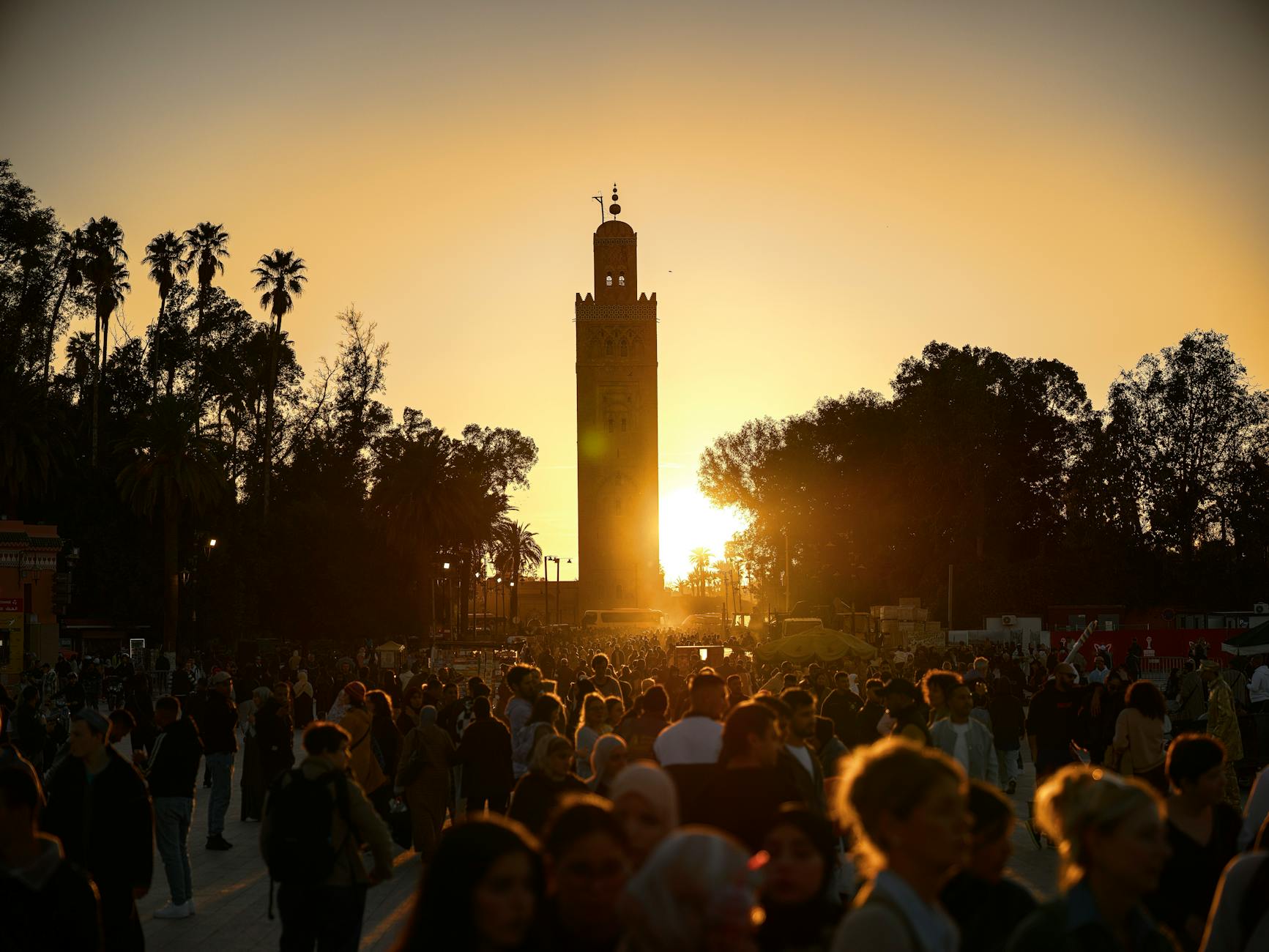
Street food in Morocco is serious business. The Djemaa el-Fna square in Marrakech becomes an open-air kitchen at nightfall — brochettes, snail broth, fried sardines, and merguez sausages grilled over coals.
Spice markets in any major medina stock ras el hanout — a blend that can contain up to 30 individual spices — along with saffron from Taliouine, argan oil from the Souss region, and preserved lemons packed in ceramic jars.
A full restaurant meal in a mid-range establishment costs between 80 and 150 MAD per person. A street sandwich or a bowl of harira rarely exceeds 15 MAD.
Mint tea, poured from height to create foam, closes every meal and most conversations. It arrives without asking, in a small decorated glass, always scalding hot.
Practical information
Visa and entry requirements
Citizens of the European Union, the United States, Canada, the United Kingdom, and over 60 other countries enter Morocco visa-free for stays up to 90 days.
A valid passport with at least six months of remaining validity is required. Immigration officers at Casablanca Mohammed V International Airport — the main international hub — process arrivals quickly for most Western nationalities.
Travelers arriving overland from Spain via Ceuta or Melilla follow the same passport rules but should allow extra time at border crossings, which can move slowly during peak periods.
Budget and cost of living
Morocco rewards budget travelers but also sustains genuine luxury. Guesthouses (riads) in medinas run from 200 MAD per night for basic rooms to over 2,000 MAD for boutique properties with rooftop terraces and private courtyards.
A mid-range daily budget — accommodation, meals, local transport, and entrance fees — sits comfortably around 400–600 MAD (roughly 40–60 USD). Bargaining is expected in souks but not in restaurants or pharmacies.
ATMs are widely available in cities. The Moroccan Dirham is a closed currency, meaning it cannot legally be imported or exported in large quantities — exchange money on arrival.
Getting around
Morocco's national rail network, ONCF, connects Tangier, Rabat, Casablanca, Marrakech, Fès, and Meknès reliably and cheaply. A second-class ticket from Casablanca to Marrakech costs around 90 MAD.
For destinations the train doesn't reach — and there are many — CTM and Supratours buses cover most of the country. Shared grand taxis fill the gaps between smaller towns at low fixed prices.
Renting a car unlocks the Atlas passes, the Drâa Valley, and the Saharan edges. Local guides strongly recommend four-wheel drive for pistes south of Ouarzazate.
When to visit Morocco?
Morocco has no single bad season — but the timing shapes the experience dramatically depending on where you go.
Spring (March to May) is consistently rated the finest window by experienced travelers. Temperatures across the country sit between 18°C and 26°C, the Atlas still holds snow for trekking backdrops, and the almond and wildflower bloom transforms valleys in the south.
Autumn (September to November) runs a close second. The summer crowds thin, the Saharan heat becomes manageable, and the light turns golden in a way that photographers specifically time their trips around.
Summer (June–August) concentrates heat aggressively inland — Fès and Marrakech regularly hit 38°C or above. The Atlantic coast, however, stays cooled by ocean winds, making Agadir and Essaouira genuinely pleasant even in July.
Winter brings cold nights in the mountains and occasional snow on the High Atlas passes, but coastal cities like Agadir maintain average temperatures around 18°C — enough to attract European sun-seekers from December through February.
Timing around Ramadan requires thought. The Islamic lunar calendar shifts the dates forward by approximately 11 days each year, and while the cultural experience is vivid, some restaurants close during daylight hours and the pace of business changes noticeably.
Frequently Asked Questions about Morocco
Similar Destinations
Explore more destinations in the same region of the world.