Buenos Aires

Everything about Buenos Aires
What if a single city could make you rethink everything you thought you knew about South America? Visiting Buenos Aires means stepping into a place where European architecture meets raw Latin energy on every street corner.
The Argentine capital carries a reputation that travels far. Locals call it the "Paris of the South," but that label barely scratches the surface of what this city actually is.
Prepare for late dinners, passionate street art, tango rhythms drifting from open doorways, and a food culture that takes beef very seriously. Buenos Aires rewards the curious traveler generously.
Why visit Buenos Aires?
What makes Buenos Aires unique
Buenos Aires is a city of contradictions that somehow work. Grand Haussmanian boulevards sit beside crumbling colonial facades. World-class steak restaurants share blocks with impromptu street milongas.
The city pulses with a creative restlessness found nowhere else on the continent. Theater, literature, psychoanalysis, and football are treated here as genuine pillars of daily life, not hobbies.
The barrios of Buenos Aires each carry a distinct personality. Palermo feels bohemian and leafy, San Telmo smells of antiques and strong coffee, Recoleta drips with old money and marble.
Buenos Aires at a glance
Buenos Aires is home to roughly 3 million people within city limits, with nearly 15 million across the greater metropolitan area. It is one of the largest cities in the Southern Hemisphere.
The official language is Spanish, with a distinctive Rioplatense accent that surprises first-time visitors. Italian immigration in the 19th and 20th centuries shaped the vocabulary, the gestures, and the cuisine deeply.
The city sits on the western bank of the Río de la Plata, the world's widest river estuary. The skyline, the humidity, and the light all reflect that proximity to the water.
What to see and do in Buenos Aires?
La Boca (Caminito, tango)
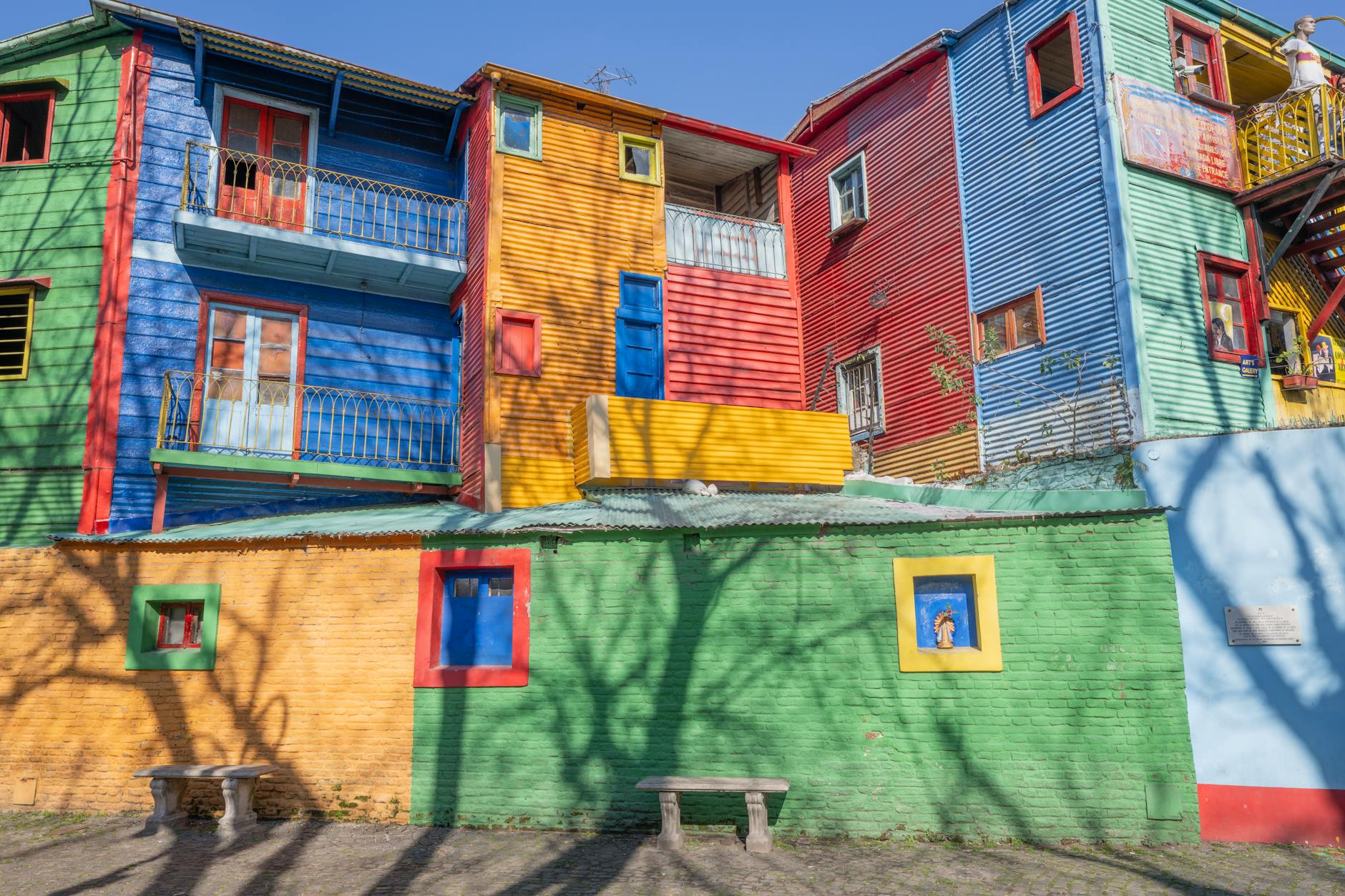
La Boca is the neighborhood that most photographers dream about before arriving. Corrugated iron houses painted in vivid yellows, reds, and blues line the famous pedestrian street known as Caminito.
The name "Caminito" means "little path" in Spanish. The colorful facades were originally painted with leftover boat paint from the nearby port, giving the street its chaotic, cheerful palette.
Tango dancers perform on small outdoor stages throughout the day, drawing crowds and cameras. This is a commercial version of the dance, but it is still visually electric and worth seeing.
Local guides recommend arriving early in the morning to beat tour groups. The streets around Caminito hold genuine local life just two blocks away from the main tourist corridor.
Plaza de Mayo
Plaza de Mayo is the historic heart of Buenos Aires and the stage where Argentina's most dramatic moments have played out. It has witnessed revolutions, protests, and presidential speeches since 1580.
The pink presidential palace, known as the Casa Rosada, faces the plaza directly. Its distinctive color comes from a historical mixture of lime and bovine blood, though modern paint has long replaced that original recipe.
Every Thursday, the Mothers of the Plaza de Mayo still march around the central obelisk. Their white headscarves and quiet determination remain one of the most moving sights in any South American capital.
The surrounding buildings include the Buenos Aires Metropolitan Cathedral, where Pope Francis served as a bishop before his election. That connection draws a significant number of pilgrims each year.
Puerto Madero
Puerto Madero is Buenos Aires at its most polished and modern. The old port district was abandoned for nearly a century before being transformed into a sleek waterfront neighborhood during the 1990s.
Converted red-brick warehouses now house high-end restaurants and loft apartments along the water's edge. The Puente de la Mujer, a rotating pedestrian bridge designed by Spanish architect Santiago Calatrava, has become the district's iconic symbol.
The ecological reserve bordering Puerto Madero provides an unexpected contrast. Hundreds of bird species nest in this green corridor, just minutes from some of the city's most expensive real estate.
Visitor reviews confirm that a sunset walk along the docks ranks among the city's most pleasant experiences. The light on the water, the boats, and the skyline combine into something genuinely beautiful.
Tango Show in a Milonga
Tango was born in the working-class neighborhoods of Buenos Aires and Montevideo in the late 19th century. It is not a performance invented for tourists. It is a living art form still practiced nightly across the city.
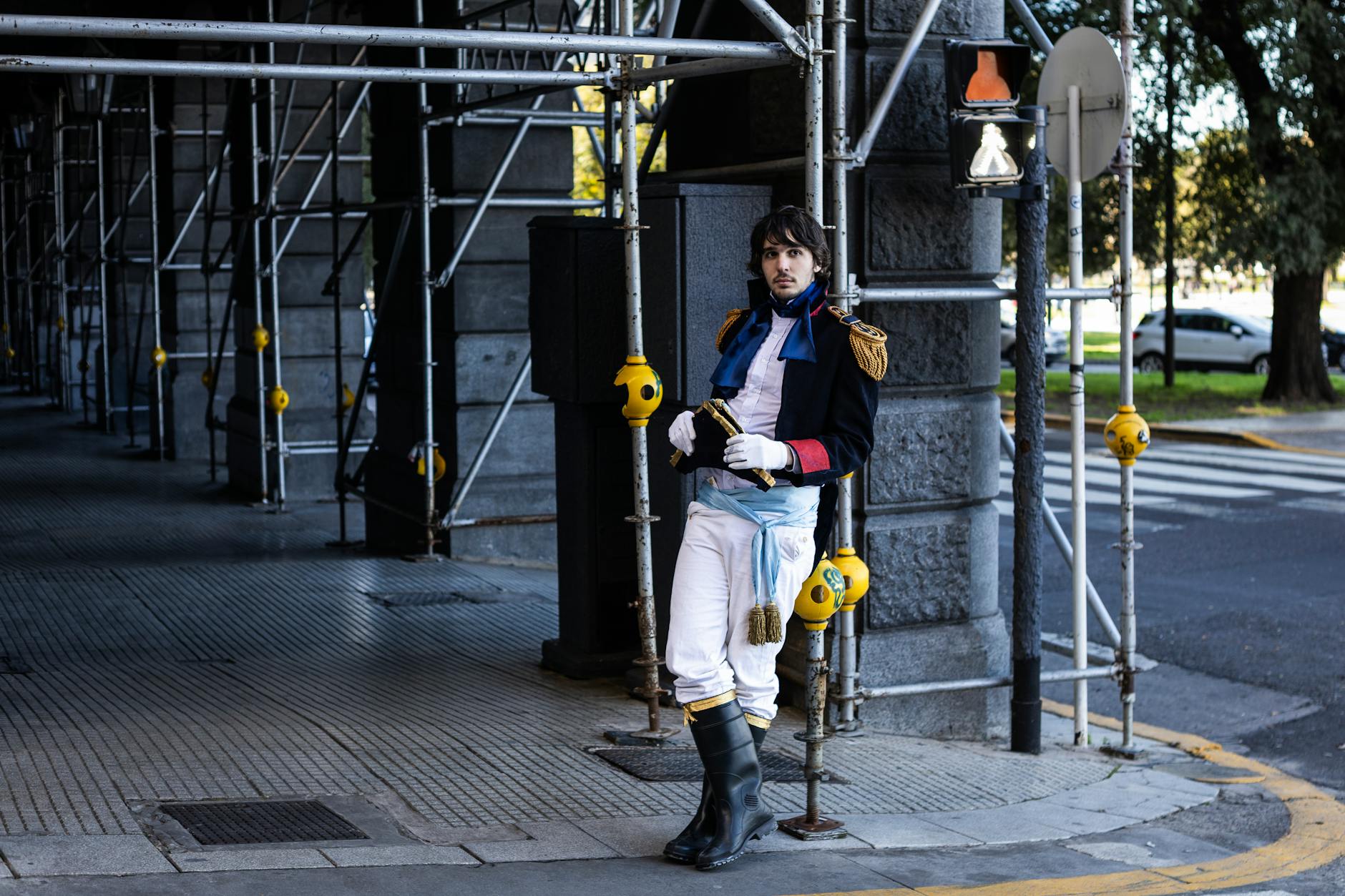
A milonga is a social dance event, not a theater show. The difference between a milonga and a tango dinner show matters enormously. One is commerce; the other is community, sweat, and raw emotion.
Local tango dancers recommend venues in San Telmo and Almagro for authentic milongas where porteños actually dance. Dress codes are taken seriously, and silence during performances is expected from observers.
Beginner workshops run before most milonga evenings. A two-hour introductory class costs between 1,500 and 2,500 Argentine pesos depending on the venue. Even one lesson changes how visitors watch the dance completely.
Food and local cuisine in Buenos Aires
Beef in Buenos Aires is not a cliché. It is a cultural institution. Argentine cattle are predominantly grass-fed on the Pampas, producing a flavor and texture that surprises even experienced meat eaters.
A traditional parrilla, or steakhouse, grills cuts over wood embers rather than gas flames. The asado is both a cooking method and a social ritual. Arriving before the meat is ready is part of the experience.
Beyond beef, Buenos Aires has a remarkable empanada culture. Regional empanada styles from Tucumán, Salta, and Mendoza all have dedicated shops across the city, each with its own spicing and folding technique.
Medialunas are the Argentine answer to the croissant: smaller, sweeter, and glazed with syrup. Locals eat them at any hour of the day, paired with strong filtered coffee in the city's classic confiterías.
Travelers focused on budget eating find that a full lunch menu at a neighborhood restaurant, including a starter, main course, and drink, regularly costs under 3,000 pesos. The food quality relative to price is exceptional.
The city's wine culture draws heavily from Mendoza and Patagonia. A glass of Malbec with an evening meal is considered standard, not indulgent. Natural wine bars and dedicated wine shops have multiplied in recent years.
Getting to Buenos Aires and getting around
Getting there
Buenos Aires is served by two airports. Ezeiza International Airport (EZE) handles long-haul international flights and sits roughly 35 kilometers from the city center. The journey downtown takes between 45 minutes and 90 minutes depending on traffic.
Direct flights connect Buenos Aires to Madrid, Rome, Paris, Frankfurt, Miami, New York, and many other major cities. Flight times from Europe typically run between 13 and 14 hours with no stopover.
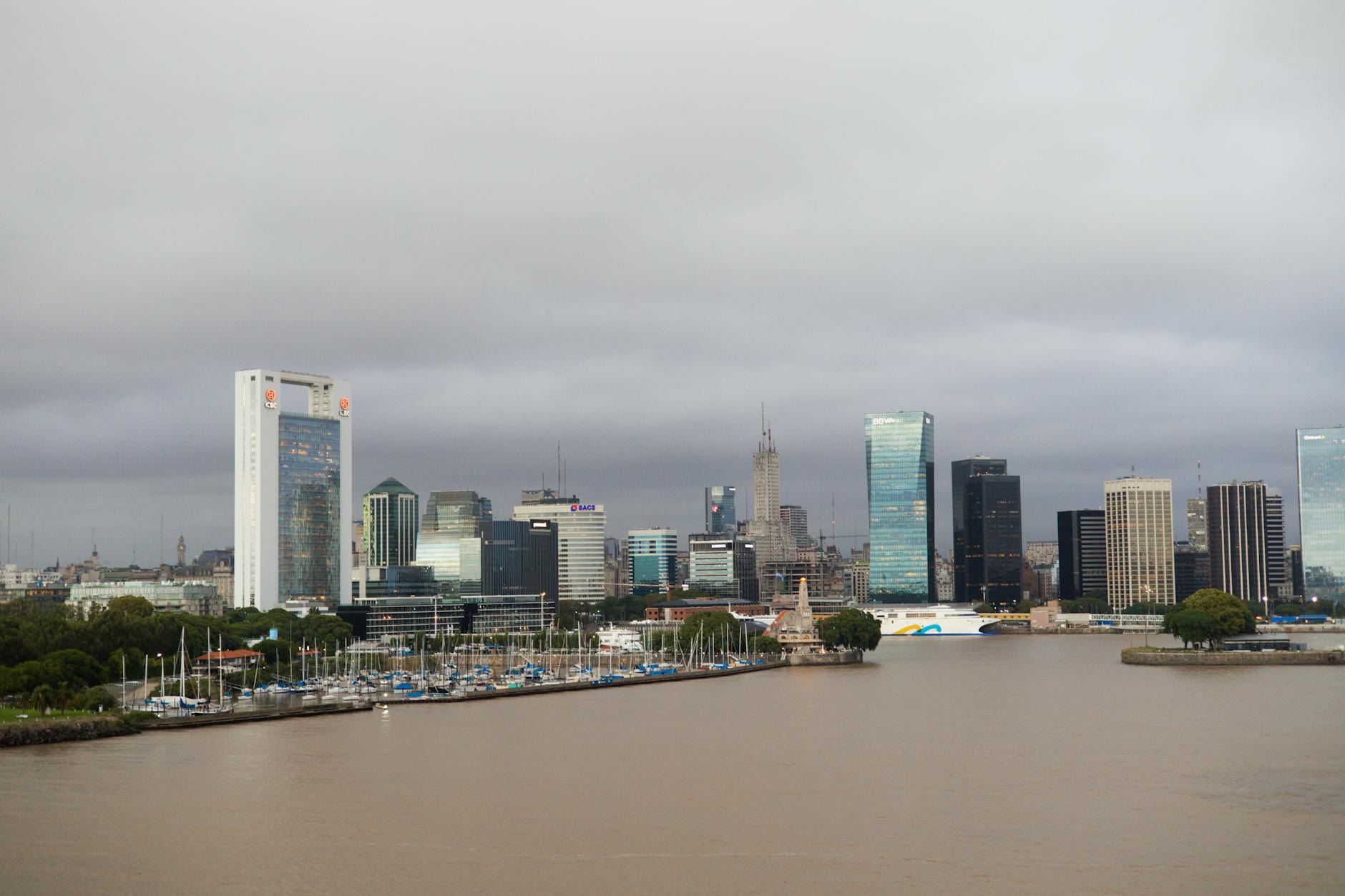
Aeroparque Jorge Newbery (AEP), located right beside the Río de la Plata, handles domestic routes and some regional South American connections. It is far more convenient to reach from the city center.
Getting around
Buenos Aires has one of the oldest subway systems in the Southern Hemisphere. The Subte network covers six lines and connects most major tourist areas efficiently. A single journey costs a fixed low fare payable with a rechargeable SUBE card.
Taxis and ride-hailing apps like Cabify and InDriver work reliably across the city. Radio taxis, called by phone or hailed at dedicated stands, are considered safer than street-hailed cabs by frequent visitors.
Walking remains the best way to understand Buenos Aires at street level. The barrios of Palermo, Recoleta, and San Telmo are all compact enough for long exploratory walks between sights.
Budget and practical tips
How much to budget for Buenos Aires
Buenos Aires sits in the premium travel category, though Argentina's ongoing currency fluctuations can significantly alter day-to-day costs. Travelers consistently note that the dollar or euro stretches further than in European capitals.
A mid-range hotel in Palermo or Recoleta typically costs between 80 and 150 euros per night. Boutique guesthouses in San Telmo often deliver strong value for travellers prioritizing atmosphere over amenities.
Dining at a quality parrilla for two, including wine, averages between 40 and 70 euros. Tango dinner shows in upscale venues in Palermo Hollywood range from 80 to 150 euros per person including the performance.
Museum entry is low across the board. The MALBA contemporary art museum, holding one of Latin America's finest collections, charges an entry fee equivalent to roughly 4 to 6 euros for adults.
Best time to visit: September to November and March to May
Spring in Buenos Aires, running from September through November, brings mild temperatures between 15 and 25 degrees Celsius. The jacaranda trees bloom purple across Palermo and Recoleta, making the city visually spectacular.
Autumn, from March through May, delivers similarly comfortable conditions. The light in April and May is particularly warm and golden, and the summer crowds have thinned considerably by then.
July and August bring cold, grey, and damp conditions. The Buenos Aires summer, from December to February, is hot, humid, and sees many local residents leave for coastal resorts, which empties parts of the city.
Frequently Asked Questions about Buenos Aires
Similar Destinations
Rio de Janeiro
Rio de Janeiro, Brazil, stacks iconic landmarks into a single skyline: Christ the Redeemer watching over…
DiscoverDublin
Dublin, Ireland pulls travelers in with centuries of history layered across cobblestone streets, from the…
DiscoverMarrakech
In Marrakech, Morocco, the UNESCO-listed Jemaa el-Fna Square crackles with storytellers, street food and…
Discover